

As If Leaving, As If Returning
I have a particular feeling for this piece. It has been with me for a long time; I began practicing it in middle school. From my awkward teens until now, every time I hear it I think something different.
Of everything Cao Zhi wrote about the goddess of the Luo River, the four characters I love most mean as if leaving, as if returning. No rule governs the motion. It seems about to go and seems about to come back. This piece has been that way for me.
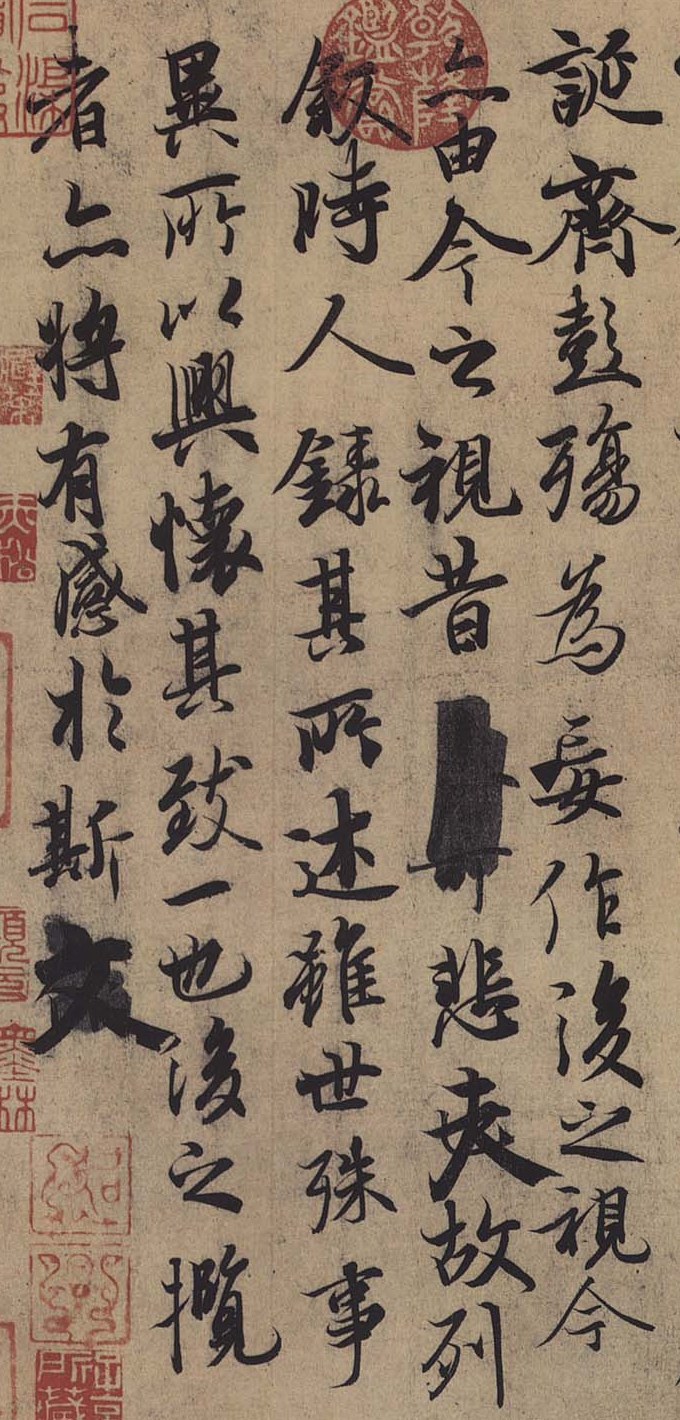
Back then, I recorded my thoughts on video. Today I have new ones, so why not publish them and leave them for a later me to think through again? Wang Xizhi wrote: “Those to come will look on today as today looks on the past.” The me of then, the me of now and the me to come are as if leaving, as if returning.
Wang Xizhi follows that sentence with two words: how sad. Whoever is moved by the words of the dead will one day be the dead whose words move someone else. I find something more than sadness in it. Being looked back on is the condition of art. A melody travels from the nineteenth century to my teenage years and on to today only because every generation, and every age of a single life, is willing to turn back and listen again.
Beauty Across Time
The Orchid Pavilion Preface holds another line I value even more: “Though the ages differ and events change, what stirs us is one.” Times differ and circumstances differ, and the reason a heart is moved stays the same.
Forms age. The orchestration of Weber’s day, the manner of the nineteenth-century fantasy and the way I played as a teenager will all go out of date. What passes through time is the situation of a person struck by a melody: wanting, afraid, trying to hold on to something.
That situation can only happen again in someone later, and so a classic lives in being heard again. Gadamer held a kindred view and named it the fusion of horizons: to understand a work from the past is to fuse its horizon with our own. The teenager who heard this piece and the person hearing it now heard different things, and both heard it truly. Part of a work’s meaning waits for later people to complete it. A classic is as if leaving, as if returning: each age believes it has seen the work off, and the work comes back from somewhere else.
When we call a piece beautiful, we are already speaking for others. Kant stated plainly in the Critique of Judgment that to judge a thing beautiful is to judge on behalf of everyone. That everyone, as I see it, includes people who do not yet exist, and includes my later self. Every publication is a wager that people to come will still want to listen.
Aesthetics in the Age of AI
Writing in the age of mechanical reproduction, Benjamin described the aura, the here and now of an artwork, withering under its copies. The change today goes further. A copy at least needs an original; generation can do without one. Any style can be summoned at will, and form no longer proves that anyone paid anything for it.
By 1971 Herbert Simon had already noticed that information uses up the attention of whoever receives it, so the richer the information, the scarcer the attention. Sound can keep multiplying. The listener still has only these three and a half minutes. Attention is limited because a life is.
Near the end of Cao Zhi’s rhapsody, the goddess speaks her farewell: “I grieve that the ways of mortals and gods diverge, and that the prime of life cannot be met.” Reading it today, I hear the distance between people and AI. AI can read all of the past and has no present of its own. It had no awkward teens. Years from now it will not hear a melody and remember who it was. It will never be the one looked back on. It is always available, so it never leaves, and what never leaves cannot return. As if leaving, as if returning belongs only to those who can go.
In Repetition, Kierkegaard says that repetition and recollection are one movement in opposite directions: what is recollected has been, and is repeated backward; true repetition is recollected forward. AI’s gift runs backward, recombining what already exists. Recollecting forward takes someone who is still going to change.
In the age of AI, the one thing I am most sure of is that the weight of beauty comes from human limits. Limited time, limited attention, only so many hearings in a life, only so many things to choose. Wang Xizhi’s “how sad” comes from knowing that long lives and short ones alike must end.
So when perfection is no longer scarce, what is scarce is the choice made by a finite person. I think of music as the arrangement of attention: what deserves to be recognized, what deserves to be remembered, how a melody gains weight in a new setting. Those decisions cost more than the sound.
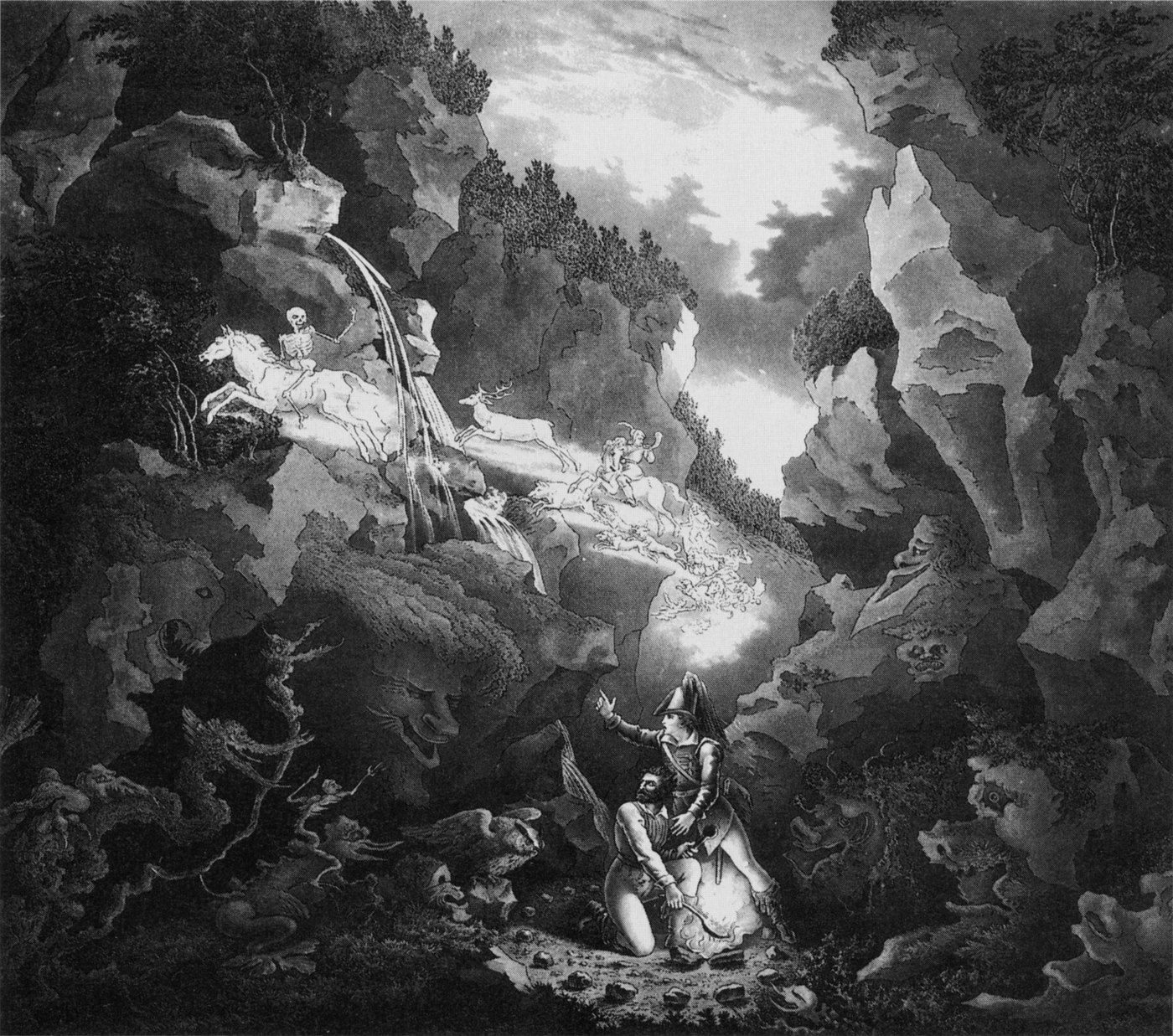
Der Freischütz happens to be a parable of this. Of the magic bullets, six obey the marksman and the seventh obeys the devil. Today everyone holds such a gun. It hits many targets, and the sound comes out accurate and full. My concern is the seventh bullet: when we no longer have to complete every note by hand, what remains ours to decide?
This Version
Beyond the clarinet, this version has backing, harmony and voices. After practicing since middle school, I know how much breath one note costs, and these sounds do not come from my breath. My work is the arrangement: where the melody stays, what surrounds it, when it steps back.
From start to finish, the loudest and quietest moments sit only about 15 decibels apart. The sound stays full and leaves almost no gaps. That is close to how we hear the world now: information layered on information, rarely a silence.
The melody of the introduction moves through this version as if leaving, as if returning. It enters as soon as the music begins. From to the original is easiest to recognize. After , material from the first half comes back. Past two minutes the melody has mostly left the surface and the bass grows heavier, deepest around . In the last twenty-odd seconds everything sinks into the low register and comes to rest in F minor, where the first notes of the introduction appear. This version ends where the introduction begins.
I call these fragments the shadow of the melody. Cao Zhi wrote of the goddess’s light: “The divine light parts and gathers, now dim, now bright.” A shadow tells you that something is there and that the light has moved. Weber wrote these melodies into an opera, Kroepsch turned them into a clarinet fantasy, and now they have reached me. Each move is a recollection forward.
Left for a Later Self
At the end of the rhapsody, Cao Zhi leaves the Luo River: “The feet go on and the spirit stays, feeling left to imagination, looking back in sorrow.”
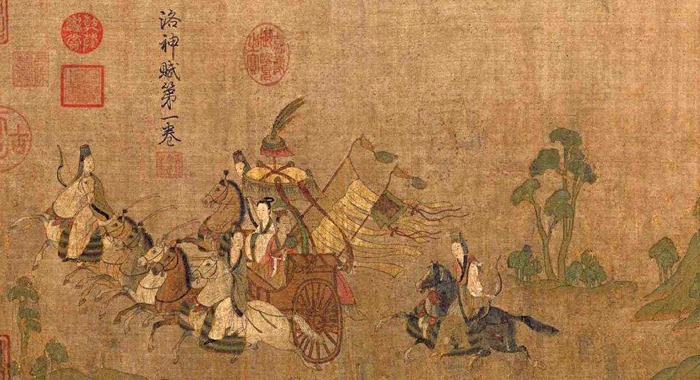
My later self will hear this version and think something else again. How that self will see me today, I cannot know. What I can do is leave today’s judgment here and wait for that self to come back.
As if leaving, as if returning.
References
Cao Zhi, Luoshen fu (222).
Wang Xizhi, Lanting ji xu (353).
Immanuel Kant, Kritik der Urteilskraft (1790).
Søren Kierkegaard, Gjentagelsen (1843).
Hans-Georg Gadamer, Wahrheit und Methode (1960).
Walter Benjamin, “Das Kunstwerk im Zeitalter seiner technischen Reproduzierbarkeit” (1935-36).
Herbert A. Simon, “Designing Organizations for an Information-Rich World,” in Martin Greenberger, ed., Computers, Communications, and the Public Interest (Johns Hopkins Press, 1971), 40-41.
Fritz Kroepsch, Fantasie aus der Oper Der Freischütz, Op. 6 (Berlin: Walther Schroeder).
Carl Maria von Weber, Der Freischütz, libretto by Johann Friedrich Kind (Berlin, 1821).