Ten States of Water
 Ten States of WaterTen landscapes of Alaska and YellowstoneView Now
"Nothing under heaven is softer or weaker than water, yet nothing that attacks the hard and strong can surpass it."
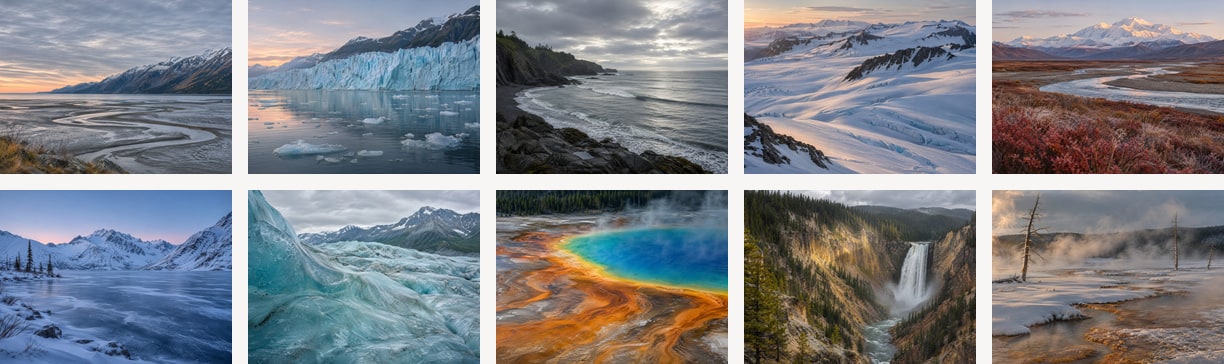
When I think of Alaska and Yellowstone, I think of water. Ten States of Water is the picture that forms in my mind: ten images, with water in a different state in each. It arrives as tide, stands as a glacier, lies frozen on a lake, falls through a canyon, and leaves a hot spring as steam.
The site is built to be looked at slowly. A cover opens it, two albums follow, and every image keeps a short reading beside it. I add to the albums as new work is finished.
The Water
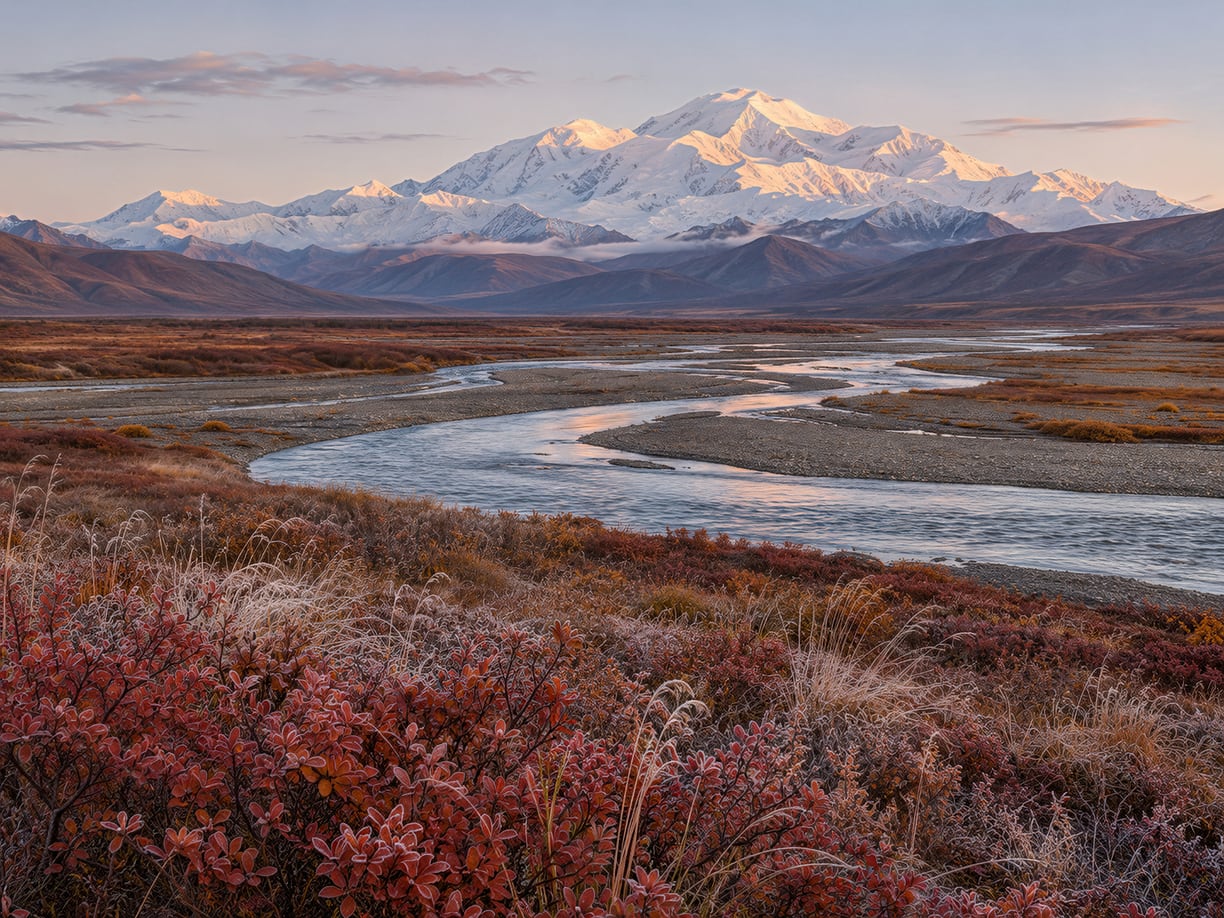
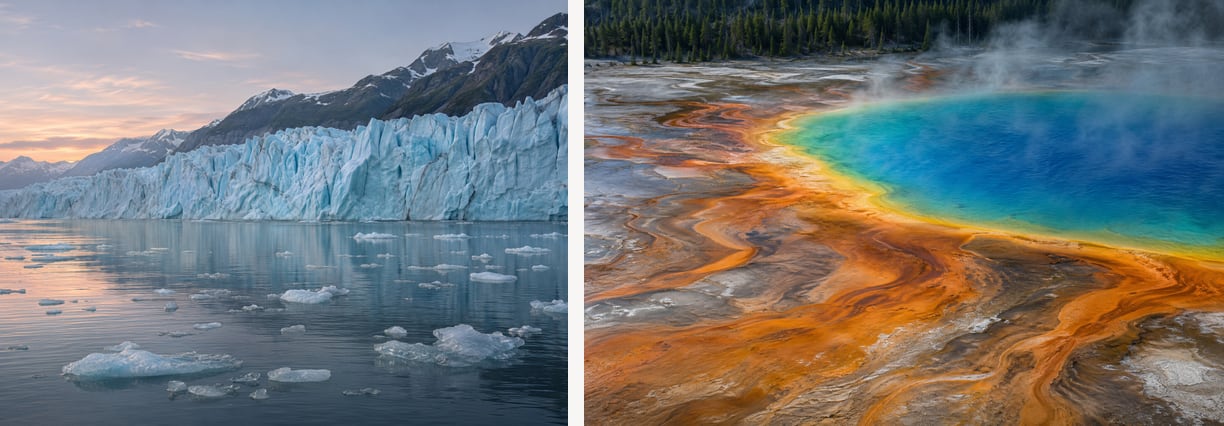
Alaska holds the cold end of the series: seven images of tide, tidewater glacier, open sea, icefield, braided river, lake ice, and glacier ice. Yellowstone answers with three: a hot spring, a waterfall, and steam lifting off snow.
The hard shapes in these pictures were cut by the water in them. The glacier carves the fjord, the river opens the canyon, the tide draws its channels through the mud, and the spring lays down its own terraces.
The Frame
I set Alaska in 4:3 and Yellowstone in 3:2. The squarer frame gives the northern sky room above the ice. The longer frame runs across a spring and down a canyon, so the ground carries the picture and the sky can almost disappear. Inside the albums every image keeps its full proportions.
The Cover
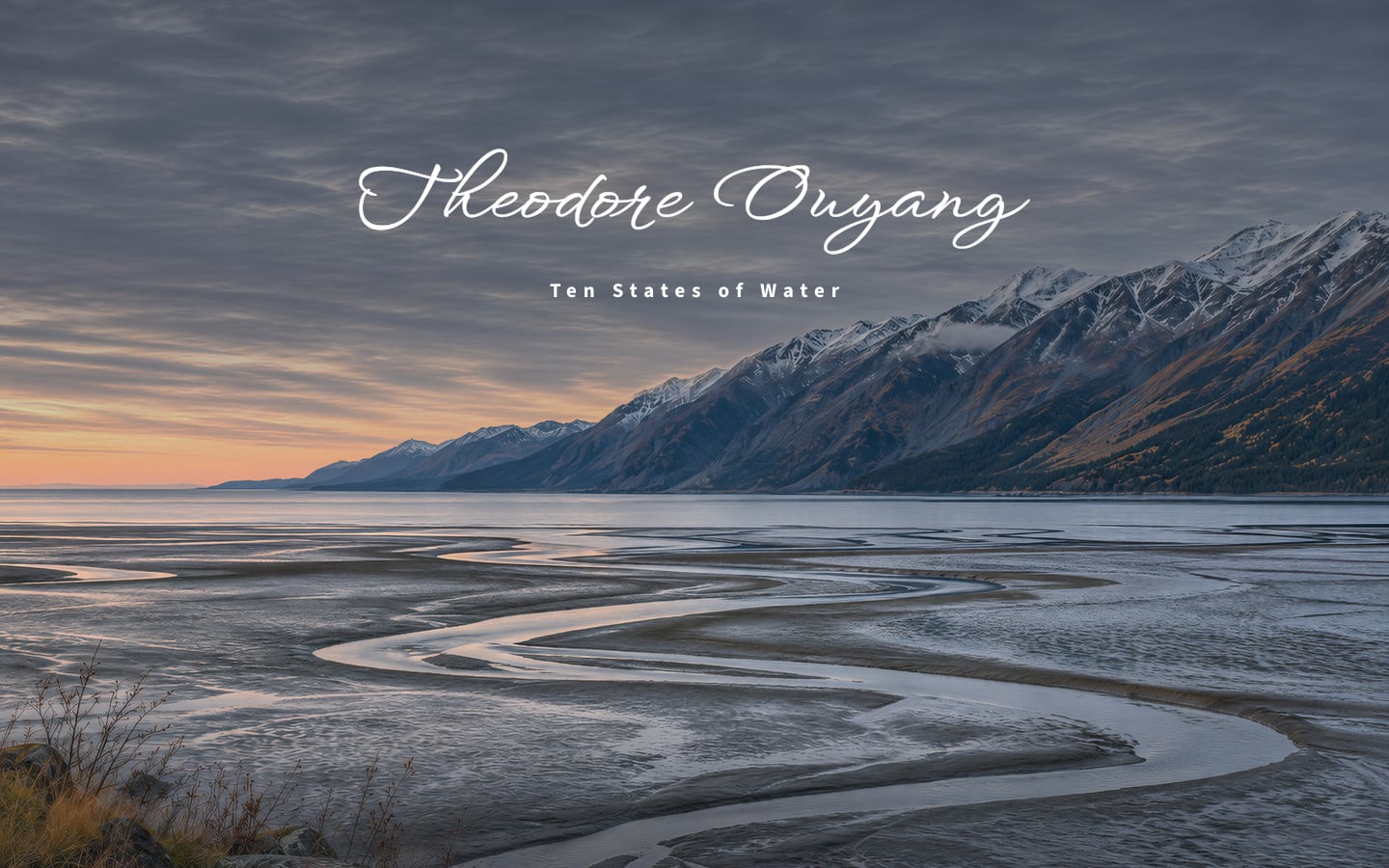
The cover is one frame: a ridge falling to the last orange on the horizon, and a channel of tidewater winding back toward the viewer. On a wide screen it fills the window, and my name writes itself letter by letter into the open sky above the ridge. On a phone the frame is cut to 2:3 around the point where the mountains meet the light, which keeps the sunset, the snow line, and the channel in one column. The name is drawn from WindSong, a typeface by Robert Leuschke.
The Readings
Every image keeps a short reading beside it, about sixty words on where the eye goes, how the light falls, and what holds the frame together. On a wide screen the reading stays in view while its image passes, so the two are read at once. On a phone it sits directly below.